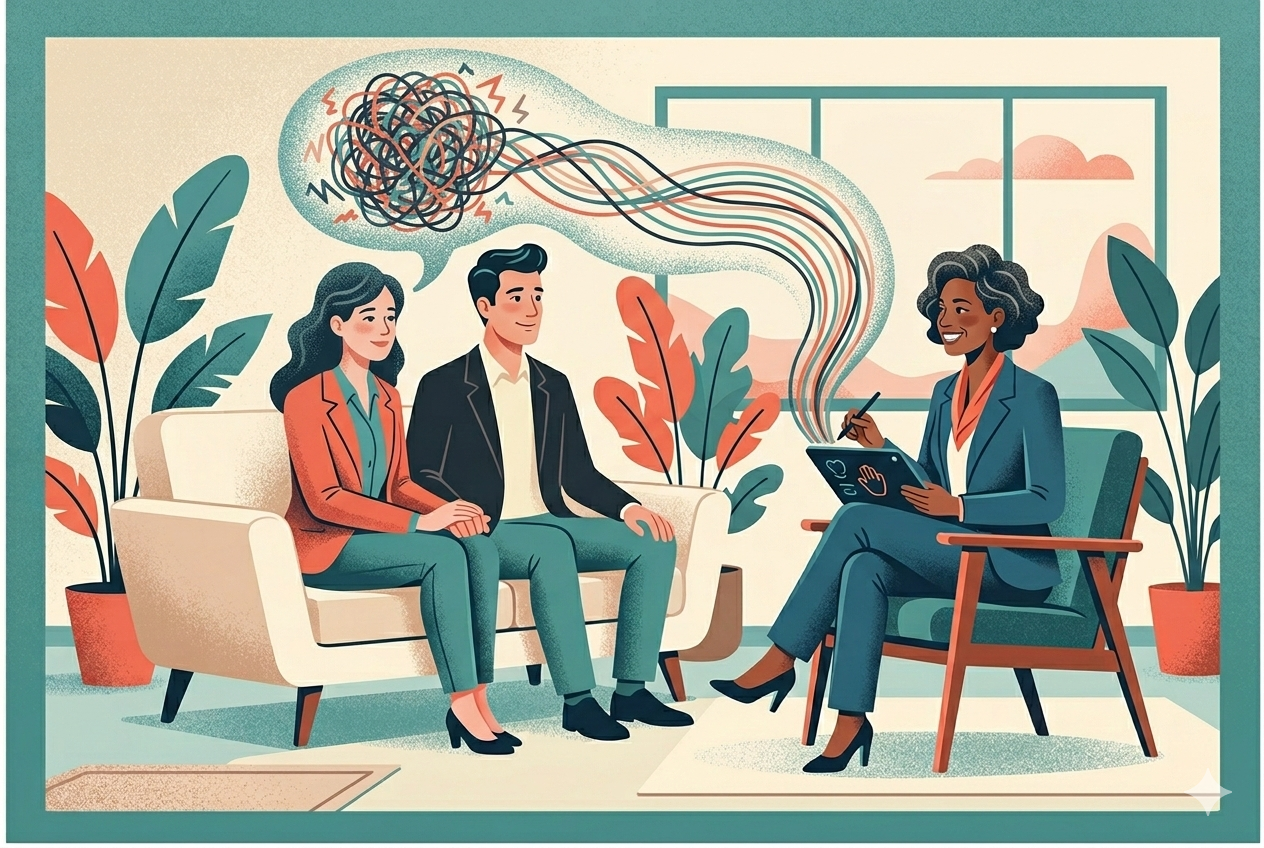
Why Couples Benefit from a Therapist Experienced in Neurodivergence
Neurodivergent couples therapy recognises that ADHD, autism, dyslexia and other forms of neurodivergence can shape how partners communicate, regulate emotions, manage daily life, and experience intimacy. Rather than viewing these patterns as problems to fix, neurodivergent couples therapy offers understanding of executive dysfunction, sensory sensitivity, masking, and rejection sensitivity within the relationship. When couples feel genuinely understood in this way, therapy becomes a space of relief — where difference is acknowledged with compassion, and connection can begin to grow from safety rather than shame.In recent years, many adults have begun to recognise themselves in conversations about ADHD, autism, dyslexia, and other forms of neurodivergence. Some have received a formal diagnosis later in life. Others are still reflecting, reading, and gradually realising that the traits described in ADHD or autism resonate deeply with their lived experience.
Whether a formal diagnosis is present or not, relational patterns tend to emerge. When ADHD traits, autistic processing differences, or learning disabilities enter a relationship dynamic, they influence communication, emotional regulation, and everyday organisation. Consequently, couples often seek support when misunderstandings begin to feel repetitive or overwhelming.
For couples navigating neurodivergence — diagnosed or self-identified — working with a therapist experienced in neurodivergent couples therapy can make a profound difference.
Growing Up Undiagnosed: The Invisible Adaptations
Many adults with ADHD or autistic traits grew up at a time when professionals frequently overlooked symptoms — particularly in girls and women. As awareness increases, more people now recognise patterns that once went unnamed. I explore this more deeply in my reflections on ADHD, perimenopause, and relationships.
Instead of receiving understanding, many heard messages such as:
“You’re too sensitive.”
“You need to try harder.”
“Why can’t you just focus?”
“Stop overreacting.”
“You’re lazy.”
“You’re difficult.”
Over time, they adapted.
They masked autistic traits in social settings.
They compensated for ADHD distractibility with overachievement.
They hid dyslexia-related challenges to avoid embarrassment.
They pushed themselves to meet expectations, often at great personal cost.
As a result, many adults learned to put their needs aside in order to maintain connection and acceptance.
By adulthood, these adaptations often appear as high achievement, hyper-independence, people-pleasing, perfectionism, or chronic exhaustion. In relationships, however, these same adaptations may show up as emotional overwhelm, shutdown responses, conflict around organisation, or cycles of misunderstanding.
Without a neurodivergence-informed lens, therapists can easily misinterpret these patterns.
What Can Be Missed in Therapy
A therapist may be ethical, thoughtful, and well-trained. However, without knowledge of ADHD, autism, or learning disabilities, certain relational dynamics can remain invisible.
For example:
ADHD-related time blindness may look like indifference.
Executive dysfunction may appear as avoidance.
Autistic sensory overwhelm may resemble withdrawal.
ADHD emotional dysregulation may seem disproportionate.
Autistic communication differences may feel distant to a partner.
Dyscalculia-related stress may intensify financial conflict.
When therapy overlooks these neurodivergent traits, couples may leave feeling more misunderstood. In some cases, sessions unintentionally reinforce long-standing shame.
A partner might think: “Even the therapist sees me as the problem.”
Although no harm is intended, the absence of neurodivergent understanding can deepen relational wounds.
If you would like to explore how ADHD challenges shape relational patterns more specifically, you may find helpful insights in my article on ADHD challenges and their impact on relationships.
What Can Be Provoked Without Awareness
Without awareness of ADHD and autism in relationships, certain therapeutic interventions can inadvertently activate old coping mechanisms.
For instance, structured communication exercises may increase masking.
Direct emotional confrontation may trigger rejection sensitivity in ADHD.
Rapid processing may overwhelm an autistic nervous system.
Homework tasks that rely heavily on executive functioning may create feelings of failure.
Consequently, therapy can begin to mirror childhood environments where difference felt unacceptable.
For individuals who spent decades accommodating others, therapy must not become another space where adaptation replaces authenticity.
The Relief of Being Met with Understanding
When couples enter neurodivergent couples therapy and encounter informed understanding, something often shifts immediately.
First, partners feel seen.
Then, language begins to make sense of patterns.
Gradually, shame softens.
Instead of asking, “Why can’t you just…?” couples begin to ask, “What is happening in your nervous system right now?”
For example:
“This sounds like executive function overload.”
“I wonder if sensory sensitivity is contributing.”
“Let’s slow this down; your system seems flooded.”
“Rejection sensitivity may be amplifying this moment.”
Because context reduces blame, partners can respond with more curiosity. As clarity increases, compassion often follows.
Late Diagnosis and Self-Recognition
Many adults discover ADHD or autistic traits in their 30s, 40s, or 50s. Others recognise neurodivergent patterns through reading, podcasts, or lived experience, even if they never pursue formal assessment.
Importantly, the absence of diagnosis does not invalidate experience.
In couples therapy, what matters most includes:
The patterns that repeat.
The nervous system responses.
The relational impact.
The coping strategies developed over time.
A therapist experienced in neurodivergent couples therapy can hold this complexity without rushing to label or dismiss.
Balancing Insight with Humility
While experience with ADHD and autism strengthens therapeutic understanding, humility remains essential. Each neurodivergent profile presents uniquely.
ADHD may appear as inattentiveness, hyperfocus, restlessness, or emotional intensity.
Autism may involve high masking, strong pattern recognition, and deep sensory sensitivity.
Dyslexia or dyscalculia may influence processing speed, reading, or financial discussions.
Therefore, the therapist must remain curious rather than assumptive.
True empathy says: “I understand this terrain, and I want to understand how it feels for you.”
Why This Matters for Couples
Relationships function as ecosystems. When one or both partners are neurodivergent, ADHD and relationships intersect in meaningful ways.
Sensory differences affect shared spaces.
Executive dysfunction influences routines.
Rejection sensitivity shapes conflict cycles.
Processing speed impacts communication.
Without recognising these dynamics, therapy may focus solely on behaviour change. However, when neurodivergent couples therapy incorporates understanding of ADHD and autism, the focus shifts toward co-regulation, accommodation, and shared responsibility.
As a result, partners stop asking who is wrong and start exploring what each nervous system needs.
A Safer Therapeutic Space
Many neurodivergent adults arrive in therapy carrying subtle relational trauma. Although experiences may not appear dramatic, repeated misunderstanding leaves a lasting imprint.
When therapy acknowledges masking, burnout, executive dysfunction, and sensory overload, it creates safety. Furthermore, when therapists name ADHD traits or autistic processing styles without judgment, clients often experience relief.
Instead of performing, they can participate.
And when safety increases, relational repair becomes possible.
Final Thoughts
Not every couple requires specialist support. Nevertheless, many benefit significantly from neurodivergent couples therapy when ADHD, autism, dyslexia, or other learning differences shape relational dynamics.
Because understanding reduces blame.
Because language reduces shame.
And because safety fosters connection.
Most importantly, the individual who spent years adapting no longer needs to adapt in the therapy room.
Instead, they can show up fully — and begin building a relationship that honours difference rather than erasing it.
To delve deeper into how ADHD traits can shape relational dynamics, you can read my article on ADHD challenges and their impact on relationships.


